
Alaska Fish Processing Rules for 2026 – How Much Can You Bring Home?
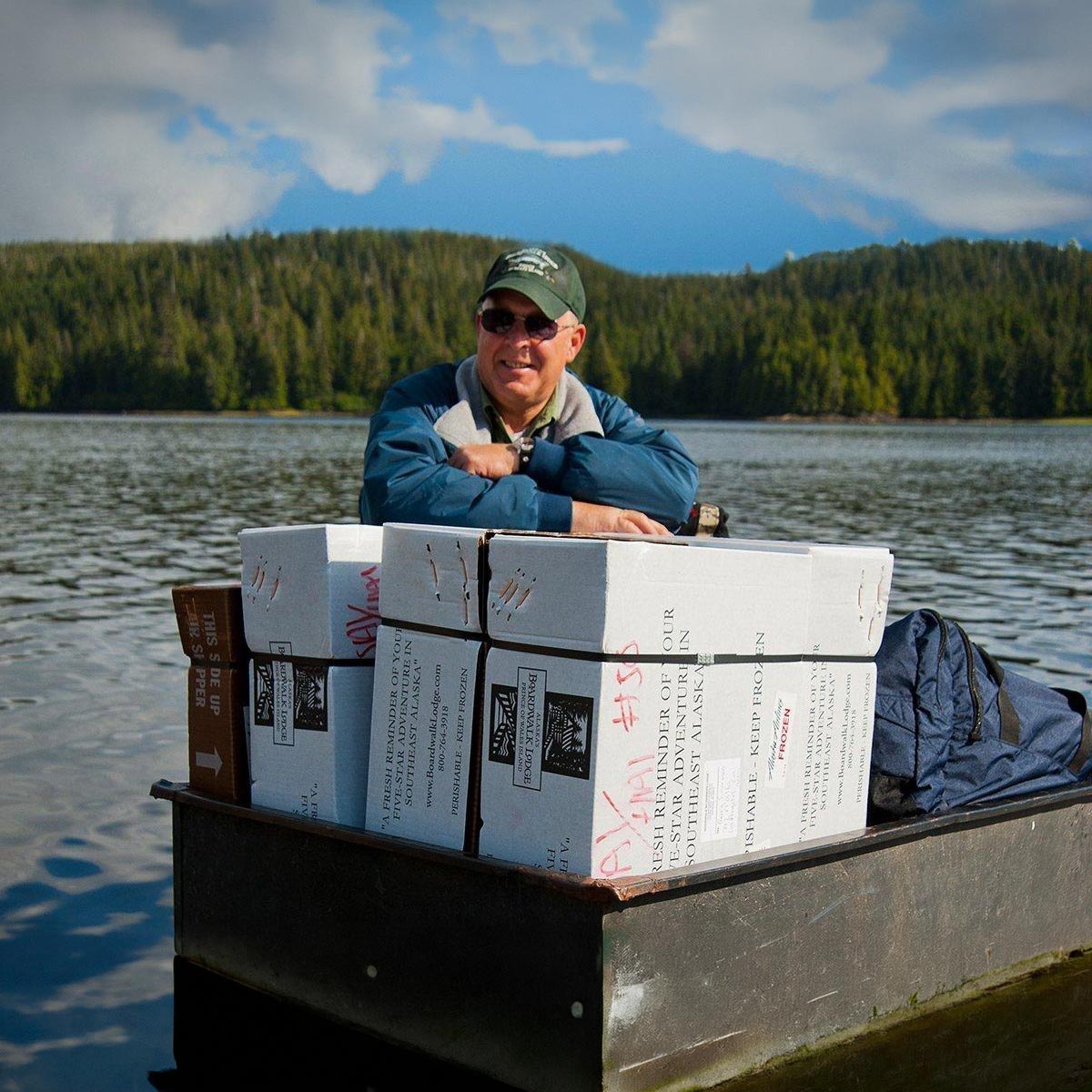
When you come to Alaska, you’re stepping into water known for big salmon, heavy halibut, and deep-water cod. These are the kinds of fish people travel for.
If you’re planning a trip, one of the first questions is simple: How much of that fish can you actually bring home? This is where fish processing comes in.
Fish processing prepares your catch for the trip home and keeps it in top condition from the moment it’s landed.
🐟 Learn more about fish processing services at Boardwalk Lodge.
What Is Fish Processing at Boardwalk Lodge?
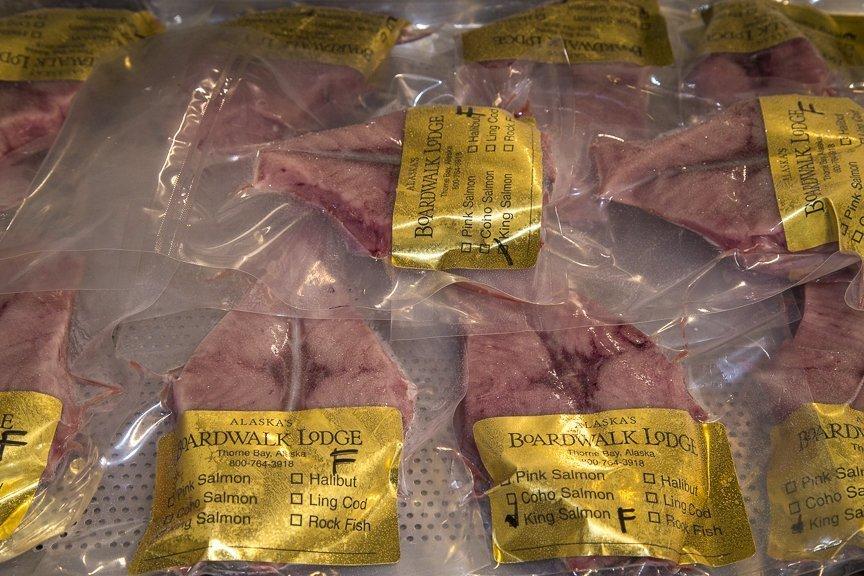
At Boardwalk Lodge, your catch is handled at our on-site fish processing facility by a skilled team that works with large, ocean-caught fish every day. Salmon, halibut, and black cod are cleaned, precisely filleted, and portioned to your preference.
You can choose how your fish is processed. Have it filleted, cut into specific portion sizes, vacuum sealed for long-term storage, or packed in insulated foam boxes with gel packs for travel. Every step follows strict food safety standards to protect quality and shelf life.
This facility is built to handle a full range of species and catch sizes, so your fish is processed correctly, packed properly, and ready to make the trip home.
This process protects your fish during travel. It does not change how much you’re allowed to keep. That part is controlled by Alaska fishing regulations and airline limits.
How Much Fish Can You Bring Home from Alaska?
There is no single pound limit for how much fish you can bring home. Alaska sets limits by species, not by weight.
Your total take depends on rules set by the Alaska Department of Fish and Game, including:
● Daily bag limits (how many fish you can keep per day)
● Possession limits (how many fish you can have at one time)
● Annual limits for certain species
● Whether your trip is guided or unguided
Each species has its own rules. For example, king salmon, halibut, lingcod, and black cod all have different limits, and some require harvest records. On guided trips, certain species like halibut follow stricter rules.
It’s also important to know that regulations can change during the season. Emergency updates can adjust limits at any time, so the exact amount you can bring home depends on current rules during your trip.
Travel limits matter too. In most cases, airline limits will affect how much fish you take home. Even if you’re within legal fishing limits, you may need to split your catch into multiple boxes or pay extra fees if you exceed airline weight restrictions.
Keep in mind: Your total allowance is based on species limits first, then travel limits.
Alaska Fishing Limits by Species (2026)
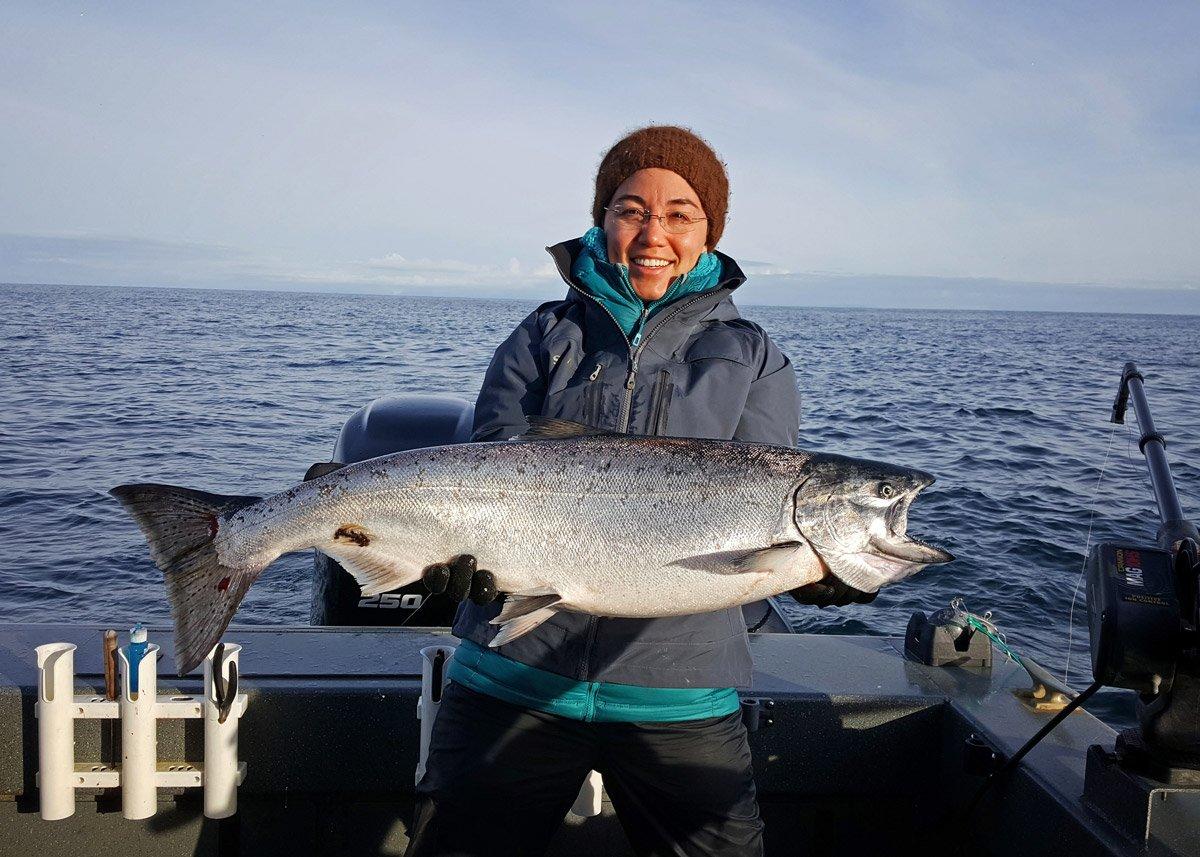
Fishing limits in Alaska vary by species and control how many fish you can keep each day, how many you can have in your possession, and what you can take home. These rules are enforced closely and can change during the season, so always check current regulations before fishing.
King Salmon (Chinook)
King salmon are the most tightly managed species in Alaska due to demand and conservation pressure. Nonresidents can keep one fish per day, and it must meet a minimum size requirement. The annual limit also changes mid-year, which many anglers overlook.
● Daily limit: 1 fish (nonresident)
● Minimum size: 28 inches
● Annual limit:
○ 3 fish (January–June)
○ 1 fish (July–December, includes any kept earlier)
Limits can shift during the season depending on run strength, so updates are common.
Coho, Sockeye, Pink, and Chum Salmon
Coho, sockeye, chum, and pink salmon offer higher limits and usually make up most of what anglers bring home. Strong seasonal runs allow for more generous daily and possession limits compared to king salmon.
● Daily limit: 6 fish per day, per species (16 inches or longer)
● Possession limit: 12 fish, per species
● Under 16 inches: Falls under a combined limit
Most take-home fish boxes are built around these species due to the higher allowed volume.
Halibut
Halibut limits depend on whether you’re fishing with a charter or on your own. The rules directly affect how much fillet you can take home.
Guided (Charter Fishing)
● Daily limit: 1 fish
● Size requirement:
○ Under 34 inches, or
○ Over 80 inches
● Restrictions: No retention on certain weekdays during peak season
● Possession limit: 2 fish
Unguided
● Daily limit: 2 fish
● Possession limit: 4 fish
Slot limits and seasonal restrictions are designed to protect breeding fish while still allowing harvest.
Black Cod (Sablefish)
Black cod, also called sablefish, are a steady part of many Alaska trips and are often processed into take-home portions. Limits are consistent and easier to track than other species.
● Daily limit: 4 fish (nonresident)
● Possession limit: 4 fish
● Annual limit: 8 fish
● Size requirement: No minimum
These fish are commonly packed into take-home boxes due to their quality.
Lingcod
Lingcod have strict size and annual limits, so each catch matters. Regulations focus on maintaining a stable population while still allowing limited harvest.
● Daily limit: 1 fish
● Possession limit: 1 fish
● Size requirement:
○ 30–35 inches, or
○ 55 inches or larger
● Annual limit: 2 fish (one in each size class)
Seasons and limits can vary by region, so timing matters.
Rockfish
Rockfish limits vary by type, and some categories come with tighter restrictions. Certain rockfish species also require harvest recording and may have seasonal closures.
● Pelagic rockfish:
○ 3 per day
○ 6 in possession
● Demersal shelf rockfish (nonresident):
○ 1 per day
○ 1 in possession
○ Annual limit: 1 fish
● Other rockfish:
○ 1 per day
○ 2 in possession
Because some rockfish live long lives and grow slowly, regulations stay stricter in certain categories.
Overview: 2026 Alaska Fishing Limits by Species
| Species | Daily Limit | Take-Home Rules (Possession, Size, Annual) |
|---|---|---|
| King Salmon (Chinook) | 1 fish (nonresident) | Minimum 28". Annual limit: 3 (Jan–June), 1 (July–Dec, includes earlier catch). |
| Coho, Sockeye, Pink, Chum Salmon | 6 fish per day, per species (16"+) | 12 in possession per species. Fish under 16" fall under a combined limit. |
| Halibut (Guided) | 1 fish per day | Must be under 34" or over 80". Possession limit: 2. No retention on certain weekdays. |
| Halibut (Unguided) | 2 fish per day | Possession limit: 4. Fewer restrictions than guided fishing. |
| Black Cod (Sablefish) | 4 fish (nonresident) | 4 in possession. Annual limit: 8. No size restriction. |
| Lingcod | 1 fish per day | 1 in possession. Size: 30–35" or 55"+. Annual limit: 2 (one per size class). |
| Rockfish (Pelagic) | 3 fish per day | 6 in possession. Most common category. |
| Rockfish (Demersal Shelf – Nonresident) | 1 fish per day | 1 in possession. Annual limit: 1. Requires harvest recording. |
| Rockfish (Other) | 1 fish per day | 2 in possession. Seasonal closures may apply. |
Important
All limits are set by the Alaska Department of Fish and Game and can change during the season.
Your total take-home amount is controlled by species limits first, then airline or shipping limits.
Does Fish Processing Change Your Legal Limit?
No. Processing does not increase what you’re allowed to keep. Your limit is set by Alaska fishing regulations before your fish is ever cleaned, sealed, or packed.
By the time your catch reaches the processing table, it has already been counted toward your daily and total limits. Processing prepares your fish for storage and travel, but it does not change your legal total.
Harvest Limits vs Possession Limits
Two rules control how much fish you can bring home:
● Harvest limits set how many fish you can keep in a single day
● Possession limits control how many fish you can have at one time, including fish from previous days
Harvest limits reset each day. Possession limits build over time and control your total.
If you fish multiple days, your catch adds up until you reach your possession limit. At that point, you cannot keep additional fish unless your total changes based on how the fish is preserved.
Frozen vs Unpreserved Fish
How your fish is stored affects how it’s counted.
● Fish that are fresh, on ice, or lightly preserved still count toward your possession limit
● Fish that are fully frozen and prepared for long-term storage may be treated differently depending on the species
Unpreserved fish includes anything that has not been fully frozen for long-term storage. Once fish are vacuum sealed and frozen solid, they may be treated differently under possession rules depending on the species.
Halibut Is Treated Differently
Halibut follows stricter rules than other species.
● It continues to count toward your possession limit even after it is processed and frozen
● Processing does not remove it from your total
Whether halibut is fresh or fully frozen, it remains part of your total. This directly affects how much halibut you can bring home.
Flying Home: Airline Rules and Packing Fish
Getting your fish home is where logistics matter. Once your catch is processed, sealed, and frozen, the next step is getting it on the plane and to your final destination without issues.
Standard Airline Limits
Most major airlines in the U.S. follow similar baggage rules for fish boxes. These rules often become the real limit on how much you can bring home.
● Standard checked bag weight: 50 lbs per box
● Standard size limit: 62 linear inches (length + width + height)
● Overweight bags (51–100 lbs) usually incur additional fees
● Oversized boxes may also be subject to extra charges
If you’re bringing home a larger catch, it’s common to split fish into multiple boxes to stay within these limits.
Packing Fish for Air Travel
Proper packing is critical. Your fish needs to stay frozen and sealed from the lodge to your home.
● Fish should be vacuum sealed to protect quality
● Boxes should be insulated and tightly packed
● Frozen fish holds temperature longer and travels better
● Loose or poorly packed fish increases the risk of spoilage
At Boardwalk Lodge, fish boxes are packed to be airline-ready, which means they are sealed, insulated, and prepared to handle travel conditions.
TSA Guidelines for Fish
The Transportation Security Administration allows fish in both checked bags and carry-ons, but there are a few important rules.
● Fish must be fully frozen if going through security screening
● Gel packs or ice packs must also be frozen solid
● Liquid water or partially melted ice is not allowed through checkpoints
These rules are important if you plan to carry fish through the airport rather than check it.
Using Dry Ice
Dry ice can extend how long your fish stays frozen, but it comes with limits.
● Maximum of 5.5 pounds per passenger (unless airline approves more)
● Packaging must allow ventilation
● Boxes must be clearly labeled
Most guests rely on properly packed frozen fish rather than large amounts of dry ice, but it can be useful for longer travel times.
Travel Day
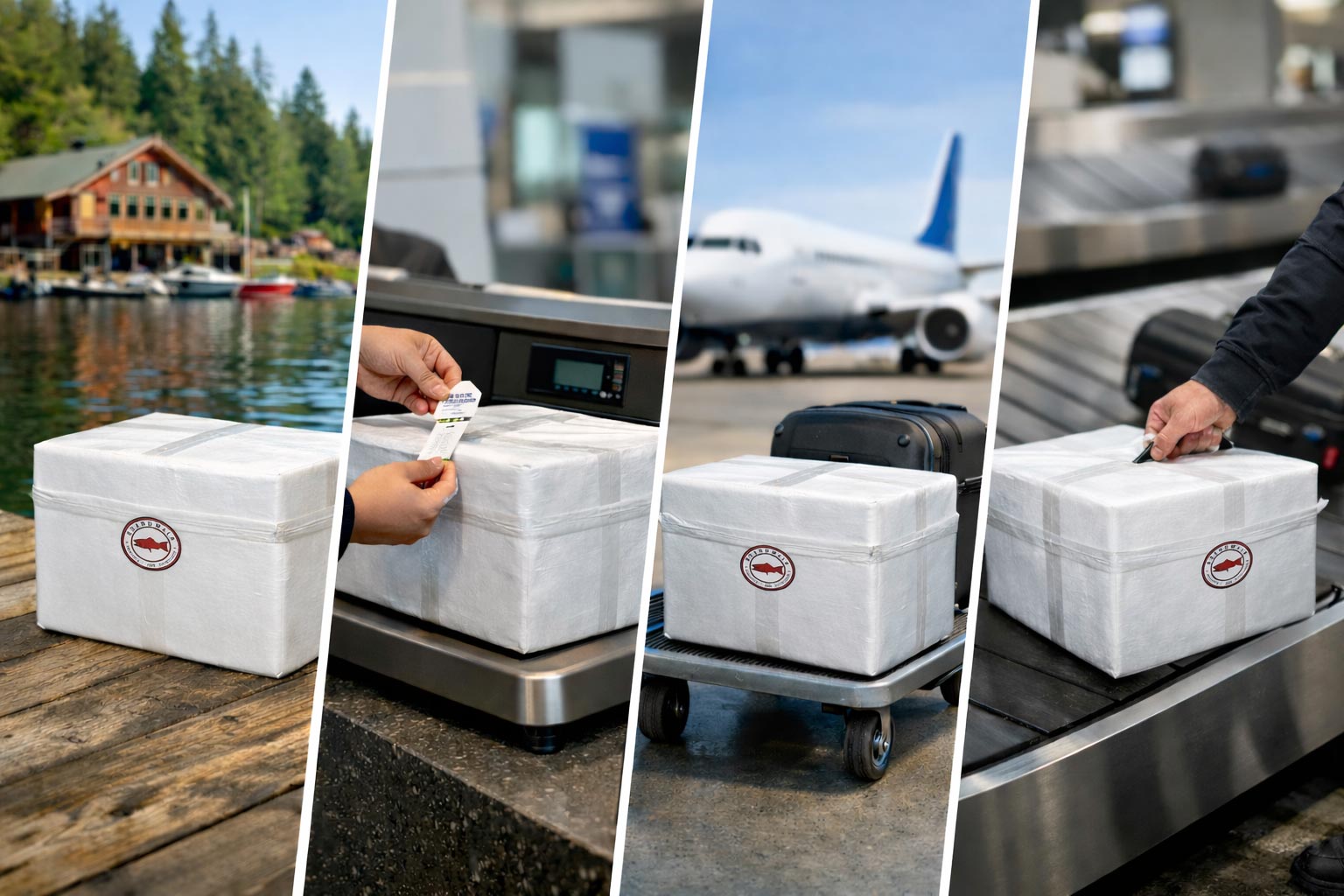
Fish boxes are typically checked like standard luggage. Once dropped off, they are handled through the airline’s baggage system.
● Plan for additional baggage fees if bringing multiple boxes
● Confirm airline policies before your trip
● Allow enough time at the airport for check-in
The goal is simple. Keep your fish frozen, packed securely, and within airline limits so it arrives home in the same condition it left the dock.
How Boardwalk Lodge Prepares Your Fish
Once your fish comes off the boat, it moves straight into a controlled, professional process designed to protect quality and prepare it for travel. Everything is handled on-site so your catch stays fresh and is processed the same day it’s landed.
👩🏻🍳 Professional On-Site Processing
Your fish is handled by a trained team that works with large, ocean-caught fish every day. The goal is clean cuts, proper portions, and consistent results across every species.
● Fish are cleaned and filleted the same day they’re caught
● Large fish are broken down into manageable portions
● Cuts are made to maximize usable meat and maintain quality
This is not rushed or improvised. Each step is done with precision so your fish holds up through freezing, transport, and cooking.
🔪 Custom Processing Options
You can choose how your fish is prepared based on how you plan to use it at home.
● Standard fillets for easy cooking
● Custom portion sizes for meals
● Steaks or larger cuts when preferred
This gives you control over how your catch is packaged and used later, instead of ending up with generic cuts that don’t fit your needs.
🧊 Vacuum Sealing and Labeling
After cutting, your fish is sealed and organized for storage and travel.
● Vacuum sealing locks in freshness and protects against freezer burn
● Each package is labeled for identification
● Portions are separated for easy use later
This step is what allows your fish to stay in top condition for weeks or months after your trip.
❄️ Freezing and Storage
Freezing is handled quickly and correctly so your fish holds its texture and flavor.
● Fish is frozen solid before packing
● Proper freezing protects quality during transport
● Boxes are packed to maintain temperature over time
This is what makes long-distance travel possible without sacrificing the quality of your catch.
📦 Airline-Ready Fish Boxes
Your fish is packed into insulated boxes designed for travel.
● Boxes are sized to meet common airline requirements
● Packaging is sealed and secure
● Insulation helps maintain temperature during transit
These boxes are built to move from the lodge to the airport and all the way home without needing repacking.
🏡 What This Means for You
By the time your fish is packed, it’s ready to travel. It’s portioned, sealed, frozen, and boxed to hold its quality all the way home.
Your catch arrives in a form that’s easy to store, cook, and share. Every step has already been handled with care, so what you bring home reflects the quality of what you caught.
What to Expect on Travel Day
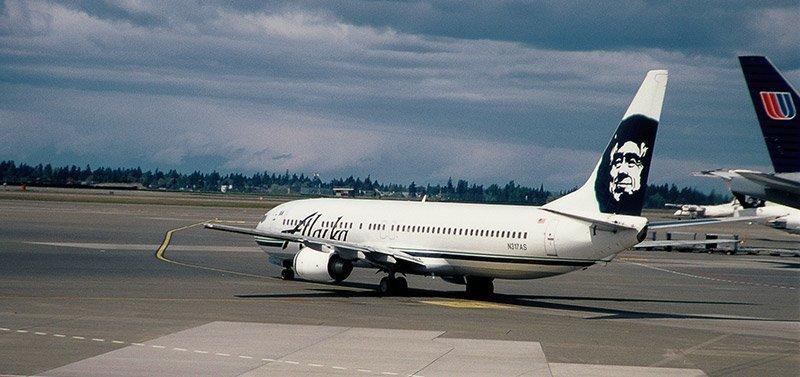
Once your fish is processed, packed, and frozen, the final step is getting it home. Travel day is straightforward if everything is prepared correctly, but a few details matter.
Checking Your Fish at the Airport
Most guests check fish boxes as standard luggage. Your boxes are weighed, tagged, and sent through the airline’s baggage system just like any other checked bag.
● Plan for 50 lb limits per box unless you’re willing to pay overweight fees
● Expect additional baggage fees if bringing multiple boxes
● Allow extra time at check-in, especially during busy travel days
Once checked, your fish travels on the same flight and is picked up at baggage claim.
Keeping Your Fish Frozen
Your fish should be fully frozen before you leave the lodge. Proper packing and insulation keep it frozen during travel. Well-packed boxes can hold temperature for long periods, especially when they remain sealed.
Avoid opening boxes during travel and keep handling to a minimum. The less exposure to warm air, the better your fish will hold its condition.
What Happens After You Land
After arrival, your fish comes out with standard luggage. From there, the goal is to get it into a freezer as soon as possible.
● Pick up boxes promptly from baggage claim
● Keep transport time short between the airport and your home or freezer
● Place fish in a freezer immediately upon arrival
This final step protects everything that was done during processing.
Final Tip
Your fish is already prepared for the trip. As long as it stays frozen and within airline limits, it will arrive home in the same condition it left the dock.
Fish Processing and Shipping FAQs
How much fish can I bring home from Alaska?
Your total depends on species limits and how many days you fish. Alaska sets daily and possession limits for each species, which determine your legal total. Airline weight limits may also affect how much you can bring back in one trip.
Can I customize how my fish is processed?
Yes. You can choose fillets, portion sizes, and how your fish is packaged. This allows you to bring home fish that fits how you plan to cook and store it.
Can I bring fish on the plane with me?
Yes. Most guests check fish boxes as standard luggage. As long as your fish is properly packed and frozen, it can travel with you on your flight.
Should I ship my fish or check it on the plane?
Checking fish is the simpler option for most trips. Shipping becomes useful when you have larger quantities or want to avoid handling multiple boxes during travel.
How long will my fish last in the freezer?
Properly vacuum-sealed and frozen fish can last for months without losing quality. Keeping it sealed and consistently frozen helps maintain texture and flavor.
Come to Alaska for some of the best fishing in the world. At Boardwalk Lodge, every part of the trip is handled with care, from time on the water to how your catch is prepared.
Book your stay and take the full experience home with you!
🐟 Learn more about fish processing services at Boardwalk Lodge.

Support
Best Alaska Fishing
Boardwalk Lodge Supports







Our Partners